
The Best Cuticle Scissors – Skin Scissors Compared

Cuticle scissors and skin scissors are two names for the same instrument: finely ground scissors for the skin around the nail, not for the nail itself. This guide answers the questions that come up before buying – which blade shape is good for what, when a cuticle nipper is the better choice, and which models suit babies, seniors and left-handers. You will find the right cuticle scissors in our overview – extra-pointed, tower-pointed or curved.
Straight to the shop: Cuticle scissors – extra-pointed, tower-pointed, curved & for left-handers.
Which cuticle scissors are the best?
The short answer: there is no single best one. There are four blade shapes, and which one is best depends on how firm your cuticle is and how steady your hand works.
- For a normal manicure at home: the short, slightly curved standard shape. It follows the nail fold and is the most forgiving.
- For very fine bits of skin: extra-pointed.
- For firmer cuticles and daily work: tower-pointed.
- For maximum control over many cuts: the spring cuticle scissors.
What counts equally for all four: the blades must close flush. Hold the closed scissors up to the light. If you can see a gap, they pull the skin instead of parting it – and that is exactly how the torn edges arise that you wanted to avoid.
Advantages and disadvantages of cuticle scissors
In favour:
- extremely precise work on cuticles and fine bits of skin
- considerably lighter and more delicate than a cuticle nipper
- you see the cut before it happens – lower risk of injury
- easy to clean, hygienic to maintain, can be resharpened
- ideal for the contours around finger and toe nails
Against:
- not suitable for very thick, callused areas of skin – there you are better served by a cuticle nipper or a callus file
- requires a steady hand and some practice
- usually several small cuts are needed instead of “one and done”
- cutting too generously causes irritation and the skin grows back harder
Our cuticle scissors recommendations
Fine, extra-pointed blades for the cuticle:
- Cuticle scissors extra long & extra-pointed – our bestseller, reaches everywhere
- Dovo cuticle scissors – premium quality from a traditional Solingen manufacturer
- Cuticle scissors – tower-pointed blade – for particularly fine bits of skin
The blade shapes compared
Extra-pointed – for the highest precision

Extremely fine, tapering blade. It reaches the smallest shreds of skin that standard scissors overlook and is suitable for torn skin at the nail edges.
Sensible if you work on your cuticles very selectively – for example with sensitive or thin skin. Demands precision: anyone with shaky hands will prick rather than cut with it.
Tower-pointed – stable and precise

The blades taper narrowly towards the top – forged more sturdily than extra-pointed versions, but still with a precise tip. Good for somewhat firmer bits of skin, widespread in cosmetics and medical foot care.
Curved – along the natural contour
The gently curved blade follows the rounding of the nail fold and fingertip. When cutting, the tip points away from the finger instead of into it – which is why this is the safest shape for home use.
Suitable for gentle, flowing cuts without snagging, for sensitive skin and for anyone who prefers intuitive handling. With well-ground curved scissors you can usually do without reworking, because the cuts follow the natural line.
Straight and broad – for defined cuts

Linear blade, popular with users who like controlled, “technical” cuts and want to remove individual skin edges or small calluses in a targeted way.
Spring cuticle scissors – for maximum control

A spring holds the scissors open, and you cut by squeezing them together. The hand does not have to pull the scissors open again and again – noticeably more relaxed when making many cuts in a row.
Combination scissors – nail and skin in one

A mixture of nail and cuticle scissors: a finely tapering tip for bits of skin, a somewhat broader blade section for thin nails. Sensible if you only want to take one tool along for a quick manicure. For pure fine work on the cuticle, the specialised cuticle scissors remain more precise.
Handle shape: narrow or wide
- Close-fitting handles – the scissors sit in the hand almost like a pen. More feel, finer work.
- Large handle rings with wider spacing – more comfortable for larger hands and for longer stretches of work.
Both cut equally well. It is a question of the hand, not of quality.
Why are many cuticle scissors curved?
The curved shape is based on the natural shape of the nail fold and the rounding of the nail bed. This allows you to cut particularly close along the skin, trace the contour cleanly and reduce the risk of frayed skin edges.
In our range you will therefore find both curved and straight cuticle scissors, depending on personal preference.
Cuticle scissors or cuticle nipper?
Both remove dead cuticle, but they go about it differently.
- The scissors cut with two blades sliding past each other. You see the cut before it happens. Usually the better choice for home use.
- The cuticle nipper sets two blades against each other from above and below, which lets it work very close to the nail fold – powerful, but it takes practice. The instrument of cosmetics and foot care.
Anyone who tends to a lot of cuticle takes the nipper. Anyone who works rarely and carefully takes the scissors. Many have both in their case.
How do cuticle scissors differ from nail scissors?
Cuticle scissors have a considerably finer and narrower blade. They are ground for soft material, not for a hard nail plate. Anyone who cuts nails with them will blunt the blade – after that it pulls bits of skin instead of parting them. For the nails, separate nail scissors belong in the case.
Cutting the cuticle correctly
- Soften. Two to three minutes of warm water are enough. Dry cuticle tears instead of letting itself be cut.
- Push back. Use a cuticle pusher to loosen the skin from the nail. Whatever can be pushed does not need to be cut.
- Only cut dead material. Living cuticle protects the nail fold from germs.
- Small cuts. Better five times a little than once a lot. The scissors follow the edge, they do not pull at it.
- Care. After cutting, apply oil or cream to the nail fold.
In detail: Cutting or pushing back the cuticle?
What alternatives are there?
- Cuticle nippers: powerful, also for firmer skin, a good view of the cutting point – ideal if you work on a lot of cuticle. Somewhat heavier and larger than the scissors.
- Cuticle pushers: for gentle pushing back, ideal in combination with scissors.
- Rosewood sticks: gentle, especially for sensitive skin or as preparation.
- Cuticle knives: for the targeted loosening of firmly attached cuticle before cutting.
Cuticle scissors for babies, seniors and left-handers
For babies
Special baby scissors have rounded tips, are particularly small and handy and minimise the risk of injury with fidgety children's hands. The rule here: only shorten edges that really protrude – less is more.
For seniors
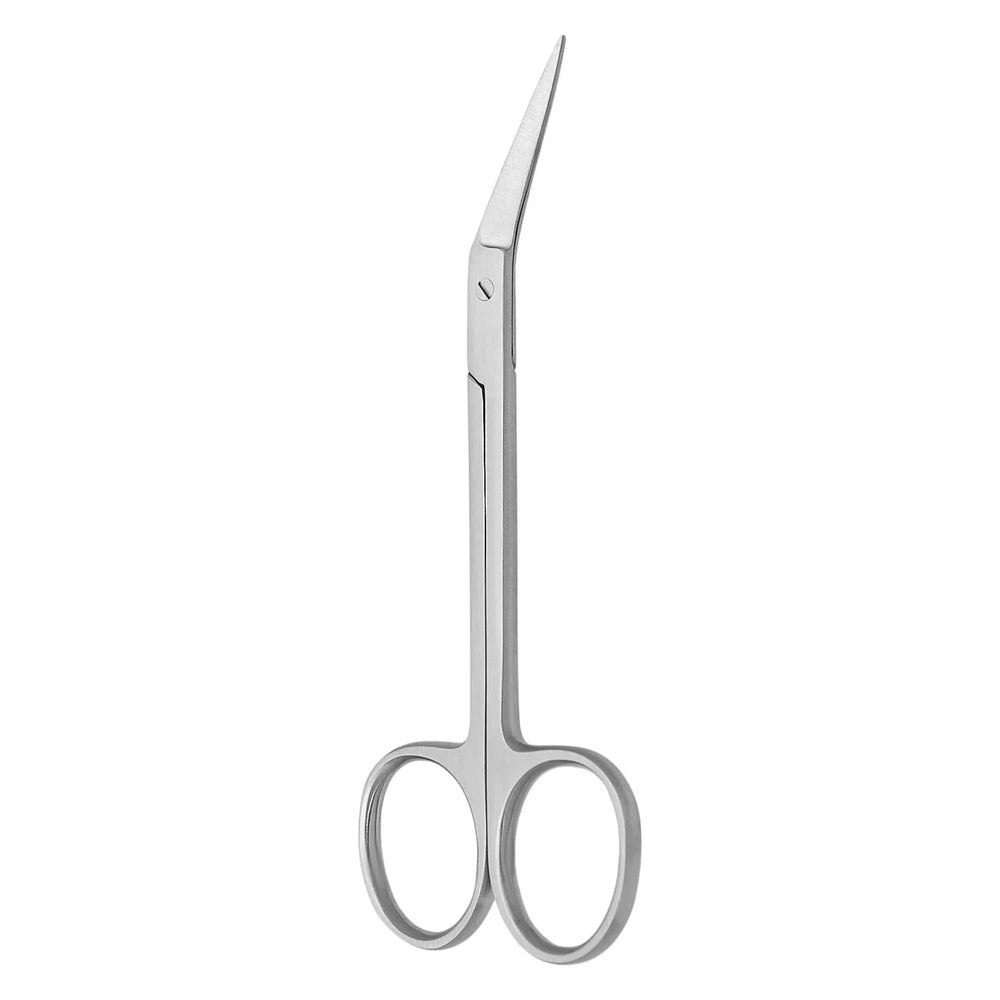
Models that sit well in the hand, have longer handles or an ergonomic shape and cut cleanly without much effort make sense. The combination of a longer handle and a curved blade reaches finger and toe areas better without having to bend far. Further reading: Cutting nails with declining hand strength.
For left-handers
With left-ground scissors the blade is forged as a mirror image. The view of the cutting edge is considerably better, the feel in the hand more natural – the work feels less twisted and there are fewer mis-cuts.
May you carry cuticle scissors in hand luggage?
The same rules apply as for other small cosmetic scissors: blades up to a maximum of 6 cm are generally permitted. Since cuticle scissors are designed for fine manicure work, the blades usually stay well below this. Details in the guide Nail scissors in hand luggage.
Care and keeping them sharp
- Wipe dry after every use and dry completely. Residual moisture in the joint is the most common cause of rust spots.
- Not as nail scissors, not for plasters, not for paper.
- Good scissors can be resharpened instead of replaced.
- Store separately from the rest of your tools so that the tip does not knock against anything.
Conclusion
- Do you value detailed work? Then extra-pointed.
- Do you like it comfortable and intuitive? Then curved.
- Do you work daily and a lot? Then tower-pointed or spring cuticle scissors.
- Only one tool for travelling? Then the combination scissors.
In any case a high-quality, finely ground, stainless pair of scissors is worth it – it can be resharpened and will accompany you for years.
More buying guides
- The best cuticle nipper – blade width and use
- The best nail scissors – shapes and grind compared
- The best nail nipper – lever action, spring type and blade shape
- The best nail clipper – models compared
- The best toenail scissors – for thick nails and for seniors
- The best nail file – glass, sapphire, metal and ceramic
- The best tweezers – for eyebrows, facial hair and splinters
- The best manicure set – what belongs in it
Matching categories: Cuticle scissors, Cuticle nippers, Cuticle knives, Cuticle pushers, Scissors for left-handers
Matching products
 Cuticle scissors extra long & extra-pointed14,99 €
  Dovo cuticle scissors – for cuticles & hangnails | Made in Solingen38,90 €
  Cuticle scissors - tower-pointed blade10,99 €
  Ruck cuticle scissors tower-pointed39,95 €
  Cuticle scissors Titanium gold - tower-pointed45,90 €
  Spring cuticle scissors long & extra fine tip5,99 €
  Nail scissors & cuticle scissors combination scissors curved12,99 €
  Cuticle scissors long & angled10,99 €