
Using a Cuticle Nipper Correctly – Grip, Cut and Common Mistakes

A cuticle nipper is a precision tool. Whether the cuticle is cut cleanly or tears depends less on the model than on how you guide it: grip, angle and how much you take off at a time. This article shows the technique step by step.
Still looking for the right nipper? The buying criteria – blade width, design and the light test on the closed blades – are covered in the guide The best cuticle nipper.

Holding a cuticle nipper and cuticle scissors correctly

Our cuticle nipper recommendations
Precise blades that cut the cuticle cleanly instead of tearing it:
- Cuticle nipper – our bestseller, clean cut
- Cuticle nipper – curved blade – follows the curve of the nail
- Nail nipper & cuticle nipper set – both nippers in one set
1. The correct grip
- Thumb and index finger rest on the arms of the nipper, much as they would on a pair of tweezers.
- The middle finger supports from below or sits lightly between the handles for more stability.
- The blade tip points forward or upward, so that you can clearly see the skin you are cutting.
- Hold the nipper lightly – no tense grip.
2. Cutting correctly
- Preparation: Soften the nails in warm water for two to three minutes and push the cuticle back with a cuticle pusher. Whatever can be pushed back does not need to be cut.
- Tension the skin: Use your free hand to pull the skin around the nail slightly taut.
- Positioning: Place the blade tip flat against the loose, dry skin or cuticle.
- Angle: Hold the nipper as parallel to the skin as possible so that you do not cut into living skin.
- Cutting: Close the nipper slowly and remove only a small piece of skin.
- Work in sections: Reposition again and again instead of tearing off long strips of skin.
- Aftercare: Apply oil or cream to the nail fold once you have finished.
3. Common mistakes
- Cutting away too much intact skin. The living cuticle protects the nail bed from germs – if it is removed too, the skin grows back harder.
- Positioning too deep or working with too much pressure.
- Holding the nipper like a pair of scissors and cutting from the wrist.
- Pulling at shreds of skin instead of cutting cleanly – usually a sign that the blades no longer close flush.
Whether cutting is necessary at all is covered in Cutting or pushing back cuticles?
Nipper design or scissor design?
Cuticle nippers come in two designs: nipper form and scissor form. The classic nipper form is particularly easy to use, because the pressure is transferred evenly through the handles and the double spring. The force does not act directly and at a single point on the skin, which allows more precise and safer work.
The scissor form requires considerably more practice and a sensitive touch. Since the pressure acts more directly on the blades, inexperienced users quickly remove too much skin.
Models in practice
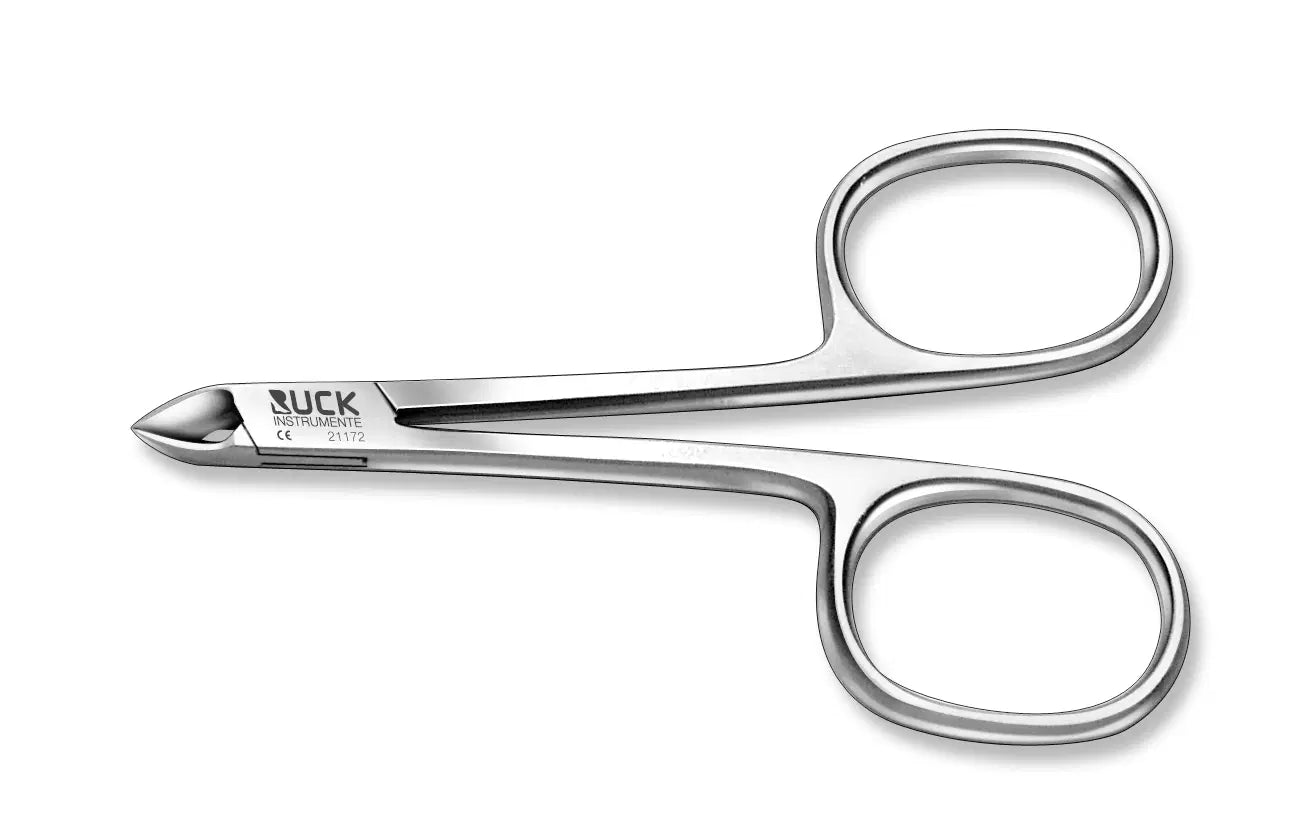
RUCK cuticle nipper in scissor form with angled blade
Made from polished, sterilisable stainless steel, classified as a medical device and used in professional podiatry.
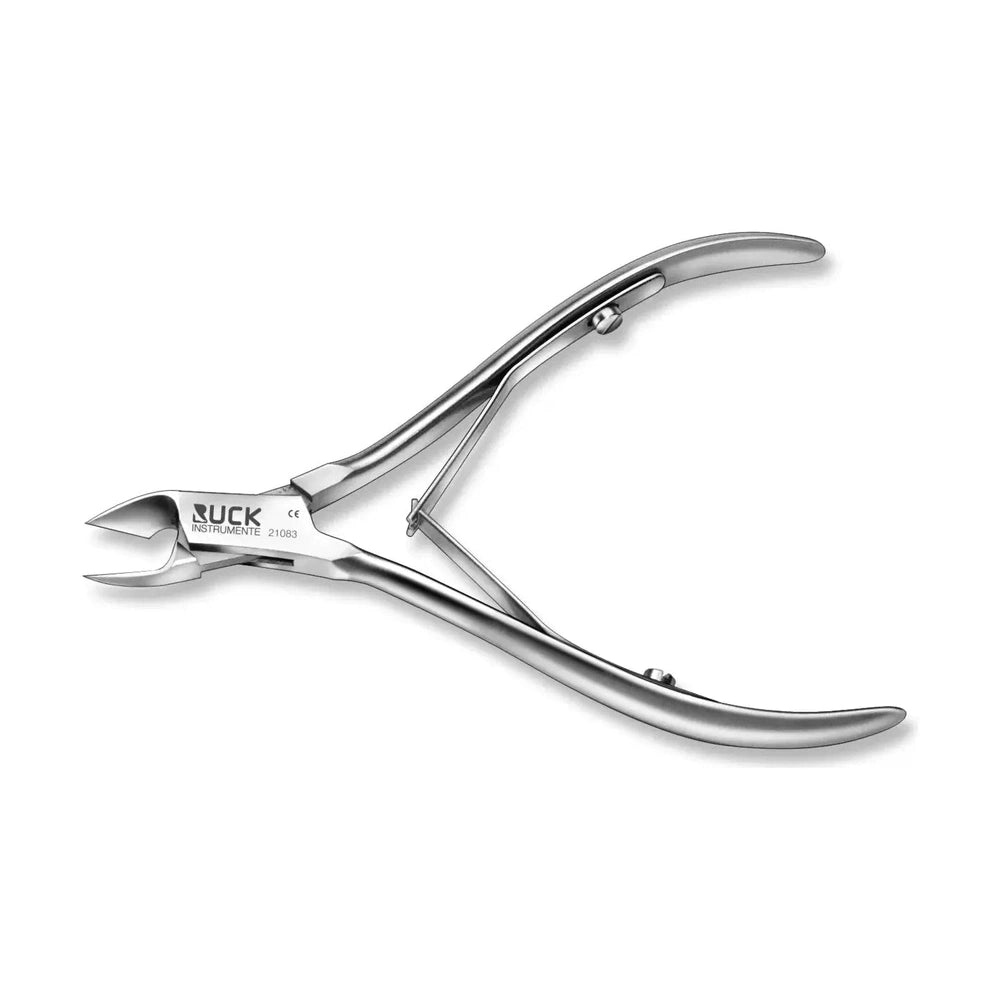
RUCK cuticle nipper in nipper form
Rust-free, nickel-free, sterilisable stainless steel. The double spring allows very precise work on the cuticle.

Erbe cuticle nipper with extra short blade
The short blade works well on the cuticles of the fingers.
Remember: A cuticle nipper is a precision tool – cut slowly, carefully and always in small pieces.
Further reading
- The best cuticle nipper – blade width, design and buying criteria
- The best cuticle scissors – extra fine, tapered or curved
- Cutting or pushing back cuticles?
- The best manicure set – what belongs in it
- Instrument care in medical foot care
Related categories: Cuticle nippers, Cuticle scissors, Cuticle pushers, Cuticle knives